This blog is adapted from a keynote presenation delivered at the Perlego Community Event, Dec 2024.
Online education has expanded educational accessibility, facilitating participation by individuals from a wide range of socioeconomic and cultural backgrounds. Yet behind each screen is an individual juggling work, family, or new careers—people who often feel disconnected from their peers and instructors. Despite its potential to bridge gaps, online learning still faces higher attrition rates than face-to-face settings, and studies suggest it can inadvertently widen achievement disparities. From Li and Choi’s landmark 2011 research identifying over seventy factors influencing retention, to my own extension uncovering nearly twenty more, the findings suggest that meeting diverse learner needs requires more than content delivery—it also hinges on fostering genuine human connection.
Cultivating Kindness Through Course Design
My grandmother’s simple advice—“Always be kind”—became my guiding educational principle. Though kindness is often dismissed as a “soft” trait, I’ve found it to be a strategic superpower: it builds trust, deepens relationships, and in leadership settings enables me to guide change and support people’s growth. The same applies to course design—when we infuse kindness into every aspect of the learning experience, we create an environment that truly supports students in their journey of becoming.. For example:
- Personalised outreach: Greet students by name, celebrate milestones, and offer timely feedback.
- Structured support: Guide learners through key concepts, tools, and problem-solving strategies, while teaching them to reflect on their progress.
- Active listening: Solicit regular feedback and adapt materials to address challenges learners actually face.
By embedding kindness into every module, we not only build students’ confidence and trust but also send a clear message: someone genuinely cares about their success. These moments of “connecting presence” don’t have to happen in real time—thoughtfully leveraged technology can create cues, check-ins, and feedback loops that feel personal and attentive whist enabling scalability. What matters most is that this empathic design is intentional from the very start of the course.
Digital Placemaking for Community
Just as vibrant public squares draw people together, thoughtfully designed digital “places” cultivate belonging in virtual classrooms. It’s not only the classrooms that count, it’s the spaces inbetween that enable connection and support. In my work with Universities, we introduced:
- Virtual lounges alongside course modules, where students could share resources, ask questions, or simply connect.
- Live networking events (with asynchronous options) with faculty and industry partners, recreating the serendipity of campus life.
- Student advisory panels and diversity campaigns to ensure every voice shapes our community.
These intentional spaces remind learners they are part of something bigger—and that their presence matters.
Leveraging Technology to Scale Kindness
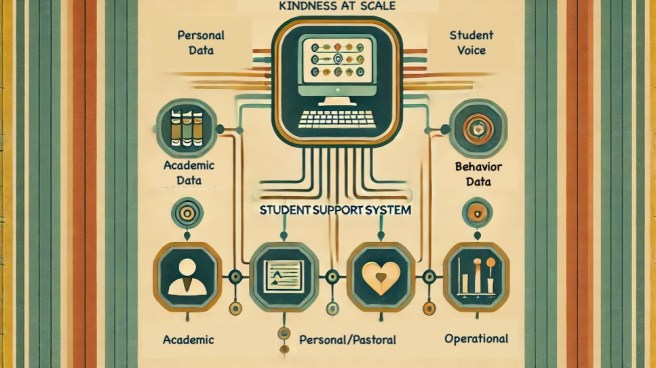
Technology can be a powerful ally when used thoughtfully. Predictive analytics alert us to students at risk of falling behind, enabling early interventions. Real-time dashboards help instructors spot disengagement and reach out when learners need support most. Adaptive learning pathways honor each individual’s pace and background. When aligned with a pedagogy of kindness, these tools ensure that even in large, global cohorts, every student feels seen, heard, and valued.
Conclusion
To make online education truly transformative, we must commit to a pedagogy of kindness, the art of digital placemaking, and the mindful use of technology. Together, these principles create virtual learning communities that are not only accessible but also warm, empowering, and human. By embedding kindness at scale, we create learning environments where every student can have the opportunity to succeed.

 Kate Lindsay Blogs